The Challenge
The Muskiz Refinery had an excess stream of low-purity hydrogen that was being routed to the fuel gas network due to its limited usability.
The objective of the project was to recover this gas, containing approximately 78% hydrogen, and convert it into a high-purity hydrogen product suitable for supplying the HD3 desulfurization unit, reducing the consumption of reformer-produced hydrogen and improving the overall energy balance of the refinery.
The technical challenge required the integration of a new PSA unit into an operating refinery, including modifications to process facilities, piping systems, electrical installations, instrumentation and control systems, while ensuring operational continuity and maintaining the highest industrial safety standards.
The Solution
EIA21 delivered a comprehensive engineering service covering all project phases, from early studies through construction supervision and commissioning.
The scope included:
- FEL study and Detailed Engineering.
- Specification, procurement management, and integration of the new PSA unit.
- Specification, procurement management, and integration of a new screw compressor for tail gas treatment.
- Multidisciplinary Detailed Engineering.
- Process, piping, electrical, instrumentation, and control engineering.
- 3D modeling and multidisciplinary technical coordination.
- Specification, procurement management, and integration of MCC modifications and a new Medium Voltage switchgear.
- Specification, procurement management, and integration of DCS modifications.
- Specification, procurement management, and integration of the Bently Nevada System 1 condition monitoring system.
- Procurement management, technical follow-up, and quality control of equipment and supplies.
- Construction supervision and Owner’s Engineering services.
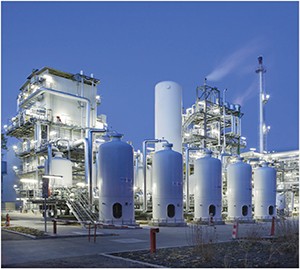
The new PSA unit enabled the production of hydrogen with a minimum purity of 99.9%, suitable for reuse in refinery hydrotreating processes.
Results
The implementation of the new PSA unit enabled the valorization of a previously underutilized hydrogen stream and optimized the refinery’s hydrogen balance.
Key results:
- Production of hydrogen with a purity greater than 99.9%.
- Recovery of more than 23,000 Nm³/h of high-purity hydrogen.
- Reduction of hydrogen sent to the fuel gas network.
- Improved overall refinery energy efficiency.
- Optimization of hydrogen consumption in hydrotreating units.
- Increased operational sustainability and profitability.
- Safe integration of new facilities within an operating refinery.
The project contributed to maximizing the utilization of existing energy resources and reducing the need for additional hydrogen production, supporting the refinery’s energy efficiency and process optimization strategy.

